
Late Autumn in the Vegetable Garden. May.
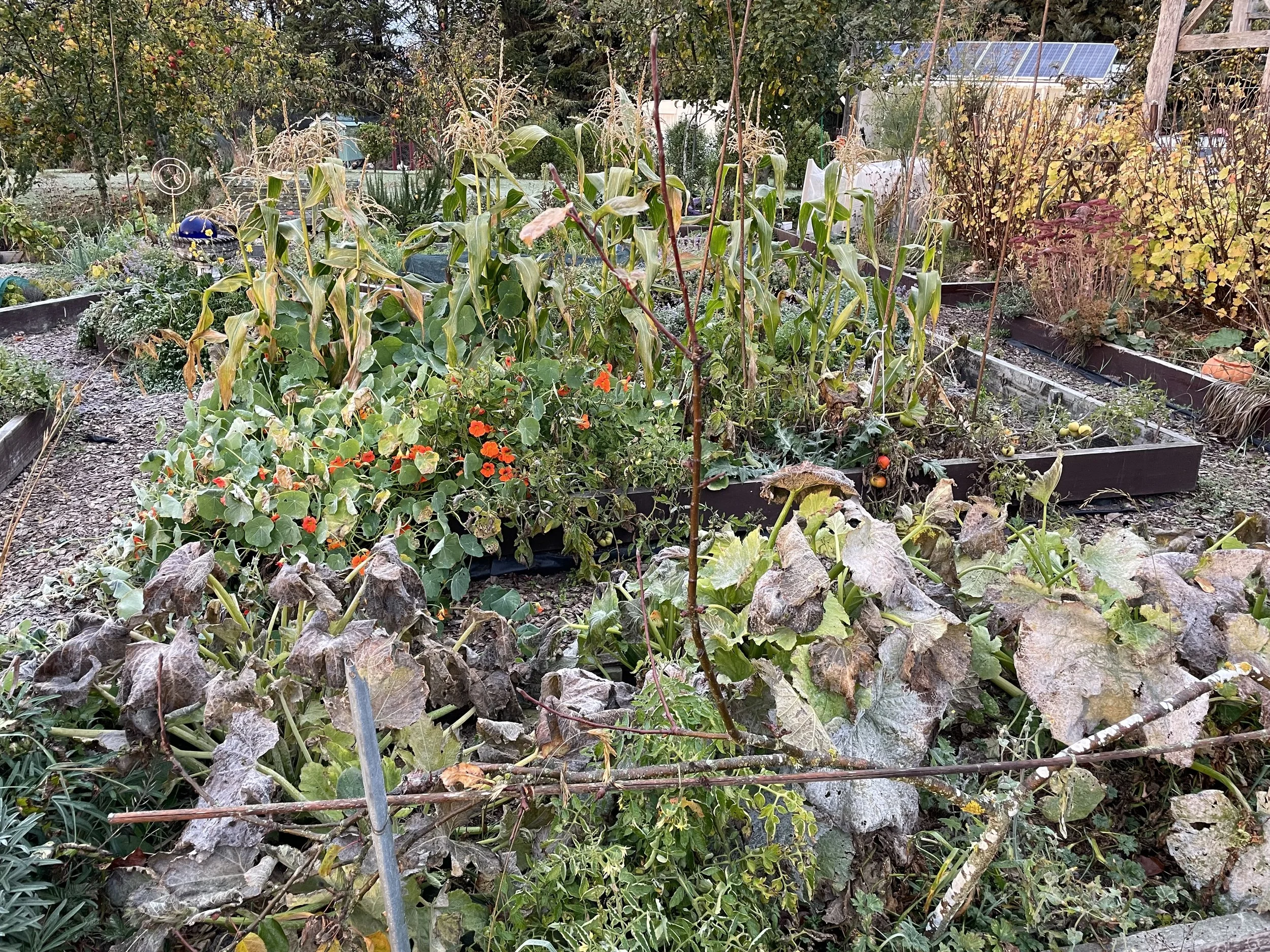
Well it feels like everything is still growing as I write this at the beginning of May. There has certainly been plenty of rain around the country - some of you in parts of New Zealand and Australia are getting more than your fair share! The lawnmower in the family has been complaining that he even the grass hasn’t let up.
The good thing is that the ground is still warm and the brassicas and other leafy greens I planted last month are still growing well. So are the weeds so each week, I carefully take off the cloches that I have covering them to protect against pests (chooks being the most likely), give each row a good weed, replenish the mulch if necessary and then tuck back up in bed. I try to make a note to liquid feed once a month too. Anything still growing will enjoy a bit of a feed. Someone down at our local recycling centre is selling liquid worm juice so that’s what I have been using. Gardening doesn’t have to be expensive so never let that put you off growing your own food.
There’s still work to be done clearing back any crops that have come to the end of their lives. Chop up sweetcorn stalks and either bury back into the same bed to replenish the carbon, or use to build up a new compost bed. Same with most dead or dying foliage from your vegetables.
Your thoughts this month should start to be turning to preparing each bed for what you are planning to plant next season. Luckily, I use my crop rotation garden plan calendar and not only have an idea of what I am going to plant next year but there are even a few notes on how to build the soil for each new future crop. Take a look on your calendar and check out the autumn or winter segment for each group. I obviously can’t fit every little detail there but it will give you a good guide.
Group 1 and 2. For me, I am going to spill over into the next bed for my green leafy crops - that is the bed where the beans (legumes) have finished. I have some broad beans in there for a green crop but also have room to plant more brassicas. That’s because we are eating more! I have been following my Tortoise Diet Method plan and when I am following it well, there is a lot more vegetable eating. And as the whole point of having a vegetable garden is to grow vegetables to eat, then I need to get more in. And as I often say, its no good having 6 caulis ready to harvest in one week and nothing for the others, I am trying to stagger the planting a little bit. I know the freezer is good for surplus and I have been doing that. I also know it takes a lot of time and attention to practice succession planning properly if you are not gardening full-time. Making a plan for yourself helps and I suggest, to myself as well as you, to make every 3rd weekend the one where you set aside time to sow or plant another row of something.
Group 4.
The bed where I grew root crops last year is where I have sown broadens for a green crop. So anywhere where I am not still harvesting carrots or beetroots, or you still have parsnips growing, I tend to put in a green crop. This is Group 4 so end of the cycle and ready to built back up again for next season.
Group 3.
The bed where I grew all the heat loving fruiting plants (group 3) (courgettes, tomatoes etc) is now well empty. Any coolness we have had, or any early frost, has hit those plants and they have finished. Except for one crazy tomato that is randomly growing beside the compost bin obviously identifying as a triffid. I’ll leave that for now and see how long it holds out. This bed is going to be where root crops go next season so here’s how to prepare for those.
Dig over the bed and weed thoroughly. You can sow a green crop if you like or give it a good mulch. I divide in half because even thought I am planting root crops, there are till different preferences in each of those families. On one side will be gross feeders like onions and garlic, and on the other side, less greedy plants who prefer a well tilled deep tilth, carrots, parsnips, beetroot etc. Celery and leeks can go in this bed too but I often run out of room so pop those in with the leafy greens or even the legume bed where there tends to be more room.
Jobs for May
This month your main job apart from finishing harvesting and clearing the beds, is to prepare the soil for garlic planting. Clear any weeds and dig in plenty of manure and/or compost. Garlic will take plenty of feeding. Add some blood and bone if you have it. Then much or cover for a week or two until ready to plant You can start planting this month or wait until next. Those in warmer parts of the country tend to plant earlier to avoid rust. I haven’t had a problem with that in my cool temperate climate so usually wait till the shortest day, 21 June.
Then dig over the other half and then either cover for the winter, or sow a deep rooting green crop such as buckwheat, barley or oats ready for root crop sowing in spring, I cheat a bit and cover with a piece of heavy black plastic and just leave for winter. If you are busy, this is a good option. It will protect the soil, weeds cannot grow and despite what you think, the worms still love it and get busy doing their job.
So that’s what’s happening this month in the backyard kitchen garden. It’s late autumn and we are all winding down for winter, but there is still plenty to do. I know it can be a bit cold but there’s noting like doing a bit of digging to warm you up!
Pop over to the store if you need a copy of the Crop Rotation Poster.