
Soft Fruit in the Winter Vegetable Garden.
Winter. July in New Zealand (January in Northern Hemisphere)
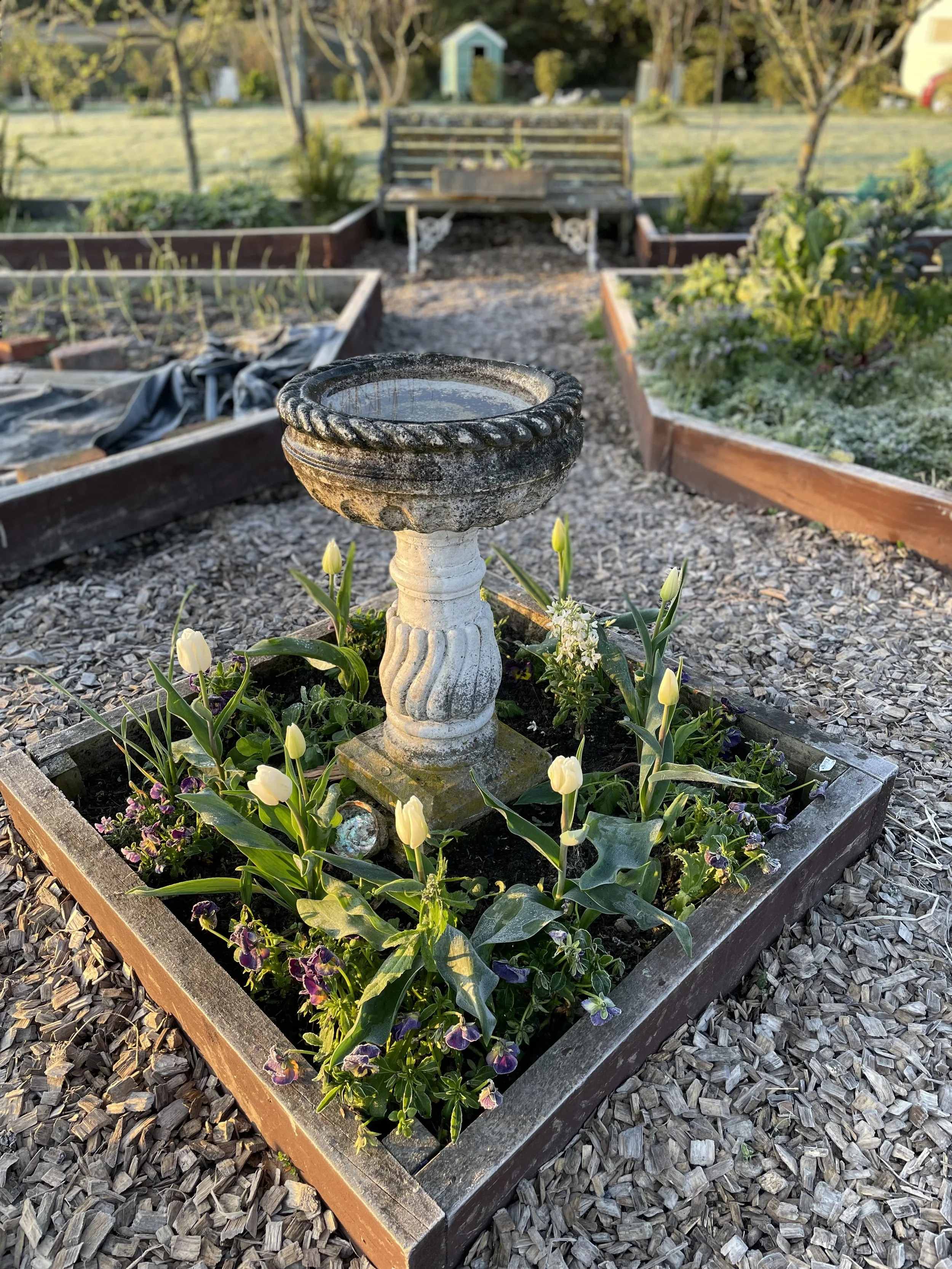
Bird Bath and garden seat as focal point in the vegetable garden.
For those of you who are following along with the crop rotation poster, we are talking this month about what to do to care for and cultivate your little piece of backyard paradise. We’ve done a round up of your main beds, we’ve covered the perennial crops in the outer beds, and this week we are going to talk about those small fruiting trees, shrubs and vines that make up the structure and variety in your bed.
If you look at the plan which your Crop Rotation Poster is, you’ll see it is really a bit of an old fashioned cottage garden in a traditional structure with an emphasis on vegetables. I use small fruiting plants or trees grafted onto dwarf rootstock at. the end of each path as a focal point as well as an anchor for your design. So each corner has one, at symmetrical intervals along the border beds, or as hedges. Check the key at the bottom of your poster for more details.
I really wanted to espalier apple trees down my southern border but there was a gap between what I intended and what the “garden muscle” felt should be done. Which is often the way when men and women garden together. My husband is a wonderful asset in the garden of course - he built out all the raised beds for me, the wood arches, the gates and fences, and has just recently replenished all the paths with fresh wood chip. It’s just that funnily enough, he doesn’t always do what he’s told. So in this instance - it just didn’t happen. So I have some quite large apple trees along that edge now.
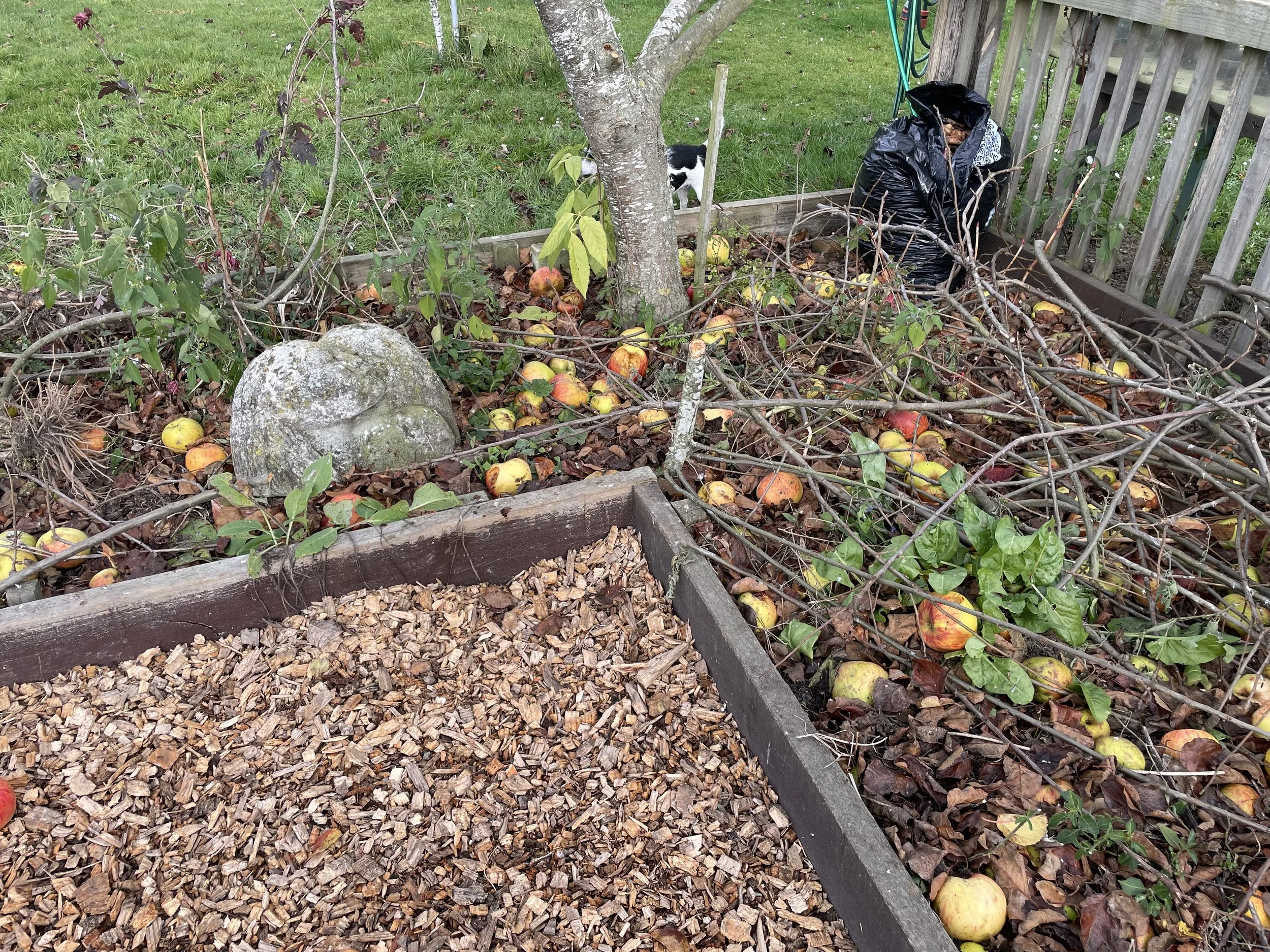
This month is the time to give them a prune back. I’ll talk a little more next month about pruning but in this bed, we mostly prune back to keep the trees in shape and for the large Monty’s Surprise in the corner, to keep it from taking up way too much space. I have ended up working with what I have and planted a hydrangea from his Grandmother’s garden in its shade. I’m not complaining!
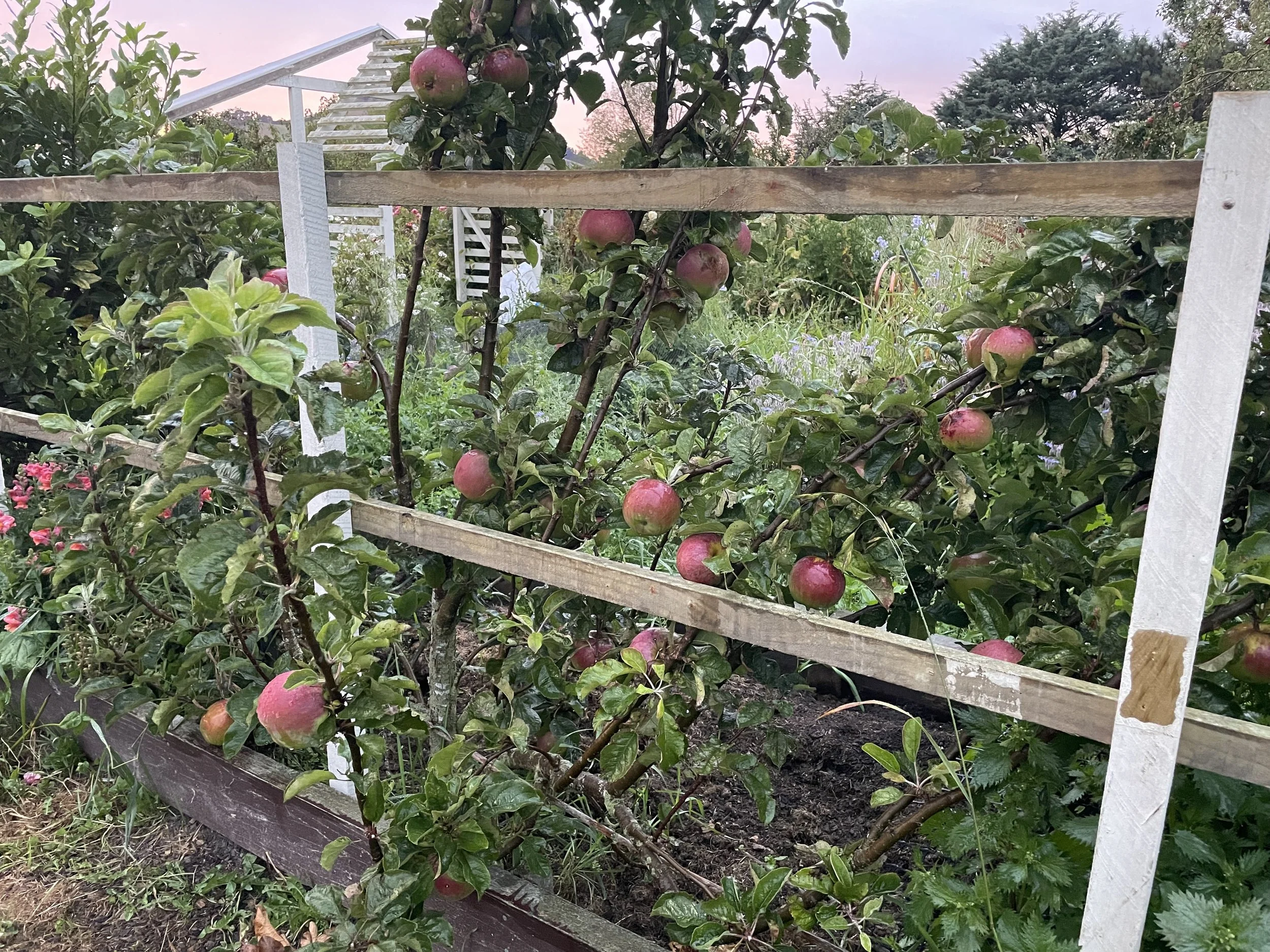
Having said all of that, on the opposite side of the bed, the north facing side, I have espaliered some apple trees - kept quite low and allowing plenty of light through. I love these. I think they call these ‘step-through” espaliers.
Bay.
In one corner I have planted a bay tree which tends to look after itself. If you have one it will need a good cut back now. They can turn into a good size tree if you are not careful and can be very dark and brooding. Keep some leaves for drying. It seems a shame to chuck out the rest of the cuttings - I wonder if I should dry them off and use them as a fragrant fire starter? Has anyone done that? I know now I just thought of it but I am sure plenty of people already do that. Spread some compost around the base and give it a good mulch. Not much grows in its shade so a heavy mulch will keep it weed free.
Citrus.
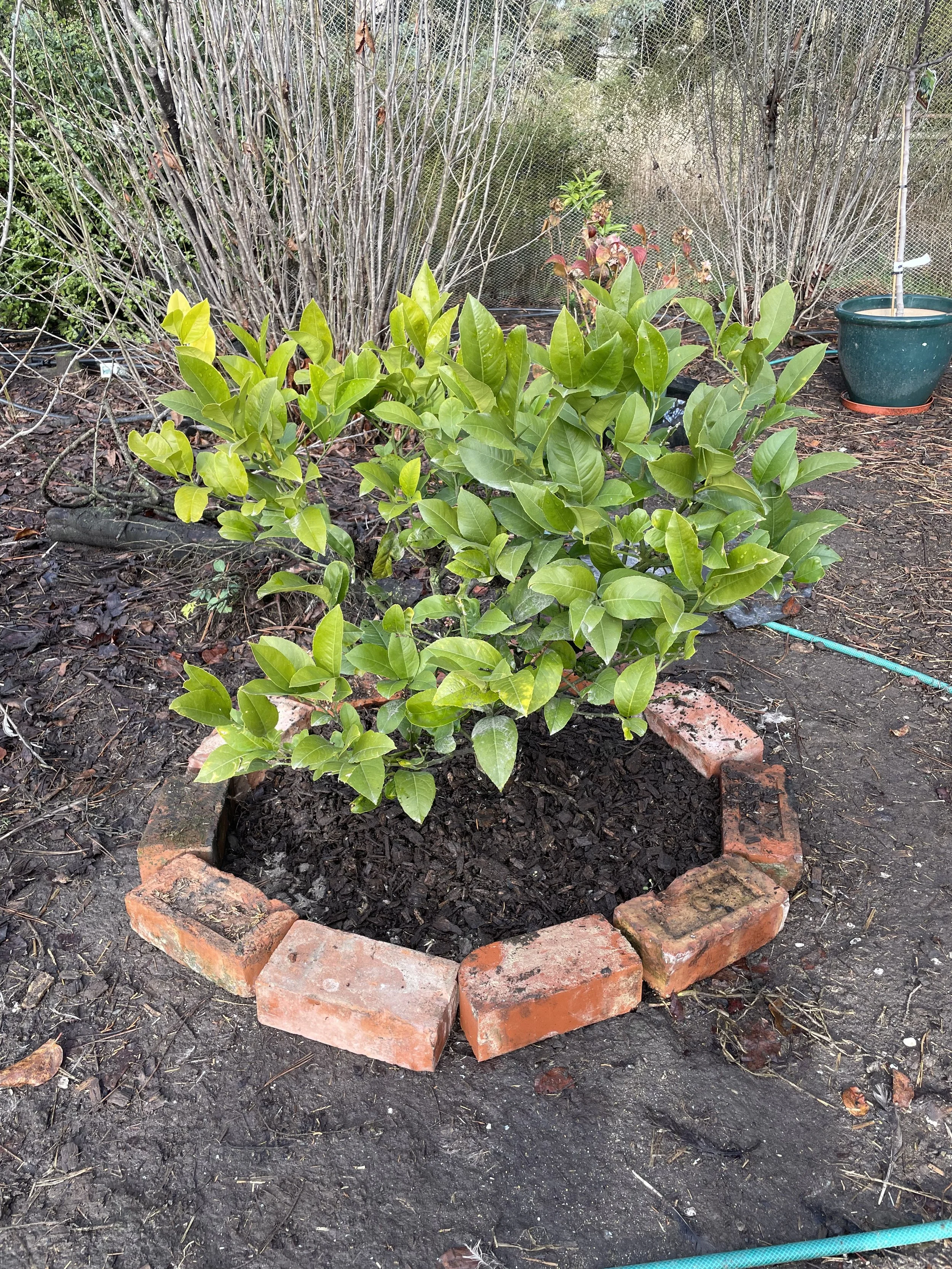
A small lemon tree is a great plant to have in your garden and can stand sentinel at the end of a pathway. If you are worried that they will grow too big, put it in a large pot as a lovely focal point. That’s the idea with this garden - it is a lovely piece of traditional design with focal points added for extra beauty and a bit of bounty on the side. Putting it in a pot has the added advantage of being able to move it inside in winter if you have very heavy frosts. You should have given them a good feed in autumn -I mulch mine with old chook poo and straw. They love the nitrogen. Harvest and enjoy.
Soft Fruits
This is the word ascribed to those lovely summer fruiting plants like black currants, red currants, gooseberries, raspberries and all the other vine growing berries. They are great in the backyard vegetable patch and very useful as a hedge. A deep border bed can have a hedge of currants with. Maybe rhubarb and strawberries growing inside that. Black currants seem to grow so well and easily where I live. They are a very reliable crop and my freezer still has bags full waiting to be made into jam. I don’t seem to have too much joy with redcurrants although I love them, and white currants are a bit of a novelty.
When it comes to pruning there is a difference between blackcurrants and red or white ones which means you prune differently. Red or white currants fruit on old wood. which means you want to keep last year’s growth. If you have a young bush aim to have a framework of 5-6 main branches then in winter (this month) prune back by a third. You will also have side shoots growing off those main branches - but them back to about 3 kms long. For Blackcurrants, as they fruit on young wood you can cut the bush back to just above a bud. Any new growth that appears on old wood, cut back the old wood to the new growth. I know. I always confuse myself doing this but the trick is with anything - if you cut back only ever 1/3 each year then you won’t have lost too much and. you will learn what and what not to do.
Raspberries.
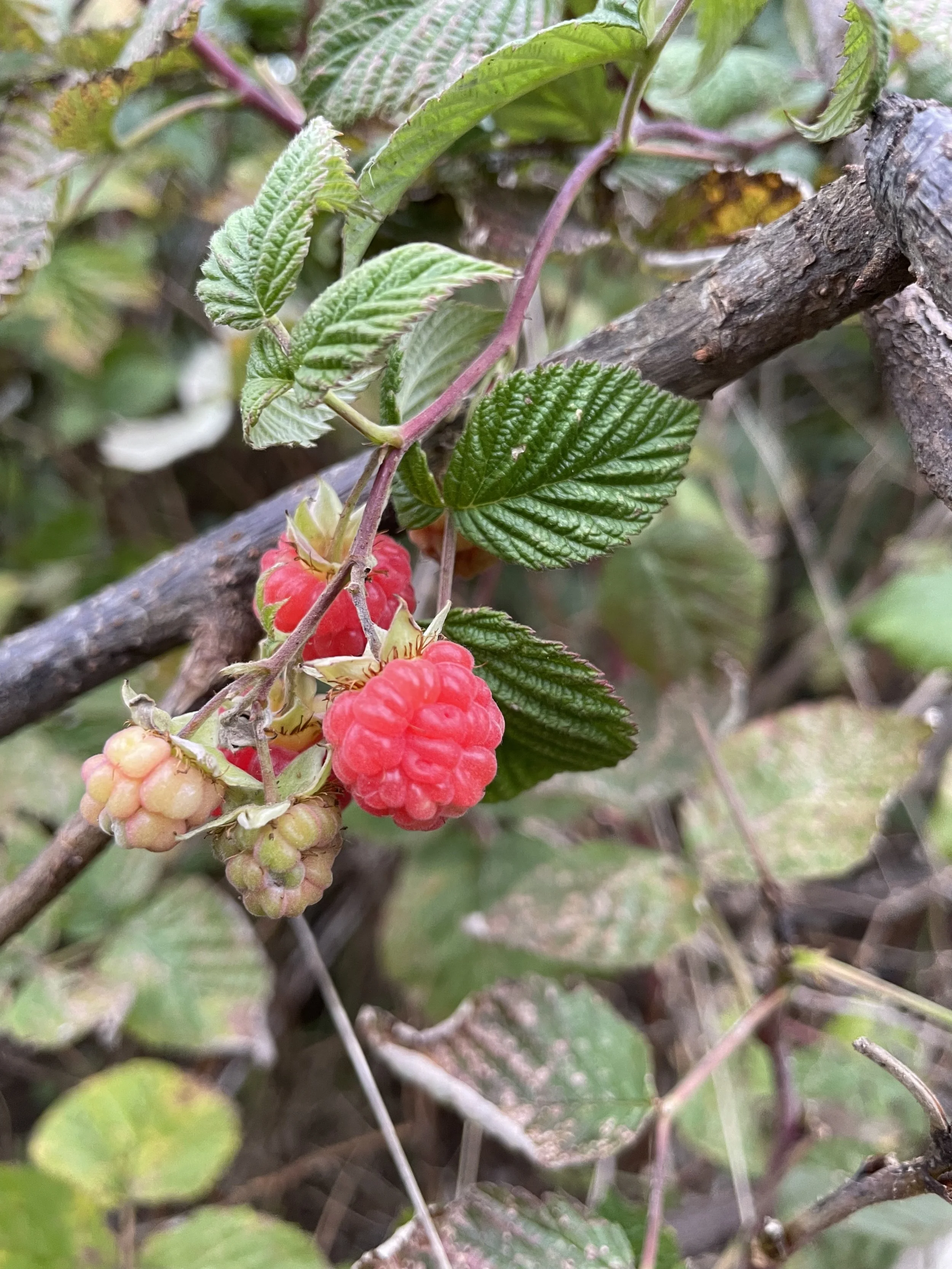
Beware of planting raspberries in this vegetable garden. They are very efficient at spreading and don’t really want to just stay neatly in a hedge. Ask me how I know. Having said that, a dedicated raised bed would be a great place to have them! They should be dormant by now and if you haven’t done an autumn tidy up, get in and give them a good weed and tidy up. Keep a few good new growth canes and remove old ones that have already fruited. Compost and mulch well. Although they are tyrants for spreading I wouldn’t be without them. Mine have been relocated to their own bed over by the chook run and in summer right through to autumn I can always pick a couple fresh for a pre-breakfast snack when I am on my way over to feed the hens.
Other vine growing type berries such as blackberries, boysenberries and all of their cousins also have to obey very strict rules if they are to be allowed in your vegetable patch. I would suggest that having a good fence high down your southern border with some good strong netting would be a great place to grow them. Both the thornless blackberry and the boysenberry have very strong vigourous canes that will require training if you don’t want them to take over. I also find the autumn prunings of the long vines can be useful for garden structures and weaving. I have posted on social media about some of the wreaths I’ve made that help to bind my sweat pea teepees together.
Pruning normally takes place after fruiting in late summer - I’ll remind you next year. If you haven’t done that yet, then cut back old growth and train up some good new season’s canes to form the framework for this summer’s crop. Then compost and mulch if you haven’t done already.
Gooseberries.
I’d better mention gooseberries which also make a great hedge in this sort of garden. They are much better behaved than the above but make up for that with their barbs. In fact they would probably make quite a good burglar-resistant hedge in an urban garden. They do like a bit of potash but not too much nitrogen so now is a good time to do that. They fruit on older wood, mostly branches that are a year old so don’t prune right back hard. Prune for framework and keeping the bush open.
NZ Cranberry - Chilean Guava
Probably one of the best and most well-behaved fruiting hedges is what we call here in the New Zealand Cranberry. It is also called the Chilean Guava and is from the myrtle family. Can take a bit of shade, can be pruned to shape, looks gorgeous and any toddlers or young children in your family can safely and happily snack away on its fruit. As always, keep well mulched to keep it weed free, and feed with compost in autumn and spring.
Blueberry
The other outstanding small fruiting bush that I would recommend is the blueberry. I mean - what’s not to like? The shrub itself is very pretty, it takes on a bit of an autumn colour, you can pick them for weeks, and the fruit itself is super healthy and delicious. There has been a bit in the news recently about importing blueberries from other parts of the world where you have to be a little suspicious of their cultivation practices. If you grow your own, you know exactly what has gone into producing your fruit. If you have the room, grow blueberries. They do have particular requirements which I won’t go into in this column, but definitely recommend. You can also have one in a pot like I mentioned with the lemon tree earlier on.
Cuttings.
A bonus if you are pruning and cutting back this month is that it is a good time to take cuttings of your currants and gooseberries. Choose some wood that is about as thick as a pencil and aim for about 25-30cm in length. For the bottom cut, cut straight across just beneath a leaf node. Then for the top cut, cut on the diagonal just above a node. That way you will remember which way is up! If you are doing a few from different bushes, make sure you label clearly. Then push into pots of potting mix and then into your nursery to root. You can put several cuttings in the one pot but make them all the same variety so you keep track. You can also plant straight Into where you want them to go if you are making a new hedge.
That’s probably given you enough to do and think about this week! It has got me thinking about soft fruits though. If you are really serious about growing them, then having another garden adjacent to your vegetable garden would be ideal. I have designed a few of those and you can really make them fit into your plan. Like having another lovely room next door. I’ll save that for another time but if you do want some help with design let me know.
Happy growing !