
Gardening This Month with the Crop Rotation Poster. July/Winter
July- Bed by Bed
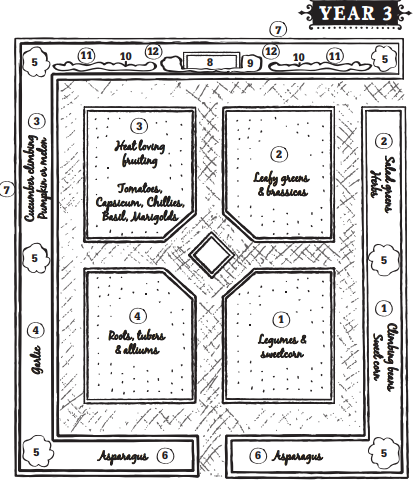
Year 3 in the Crop Rotation Cycle
July is winter here in New Zealand. We’re not long past the shortest day, sometimes called Mid-Winters Day, on the 21st June, but don’t be fooled into thinking that its the middle of winter. Winter is just kicking off as those currently experiencing heavy rain and snow will well know. I grow in a cool temperate part of the South Island so tend to speak most about what applies here but I will include more warm temperate notes as well.
I treat this time as the gardeners New year. We now celebrate Matariki in New Zealand which is all about the Maori New Year, timed to coincide with the rising of the star cluster, Matakiri, or the Pleiades, in the eastern Sky. I do love connecting our gardening calendar to the traditional days so this fits in nicely with my philosophy that June/July is the beginning of the new growing year.
For those following the Crop Rotation Poster, the planting of garlic is the plant that represents the symbolic rotation of the growing beds. So if you look at the Crop Rotation Poster, this is where I go from Year 2 to Year 3. I haven’t actually labelled the bed numbers on the poster but they start with number 1 in the top left hand corner and rotate to the right. So Bed 4 is the bottom left hand bed.
In this blog, I am going to go through each bed to give you an update for July of what’s going on in each area. . You don’t need to copy the design of course, but you can divide your own garden into 4 parts to ensure that the principles of crop rotation are followed, and each bed is in the best condition to grow the plants you are planning on putting in.
Bed 4. Group 4.
So, referring to the Crop Rotation Poster, Group 4, which is roots, tubers and alliums, will be planted over the season in this bed. Check on your poster for the notes under Preseason Prep for Group 4. I gave it a good dig over in autumn and then divided it in half. One half is where I will sow carrots, beetroot and parsnips later on in Spring. They like a nice friable soil and I do sprinkle a bit of general purpose fertiliser before covering that half to keep it weed free and ready to plant in spring. Well rotted compost is fine but avoid nitrogen based feed - root crops prefer potassium and phosphorus for root development. The other half is where I have planted garlic and onions. Shallots go here are well. So I did sprinkle it with a bit of wood ash (because we had it available) and plenty of animal manure and compost. Garlic and onions like to be well fed. So I have 3 rows of garlic in and marked out where my onions are going to go for next month.
Bed 1. This bed is where I will be planting the Group 3 heat loving plants in a few months time when it warms up, but the beauty of the crop rotation system means that it is still full of Group 2, leafy greens and brassicas. This is our main winter eating bed and so just keeping weed free by hoeing once a week, keeping the mulch up and protecting from frost. Although I was a bit lax in that department last week with a very hard frost pre-freezing all my vegetables! They seem to have survived alright though. There is celery growing in here too so I just pull stems off for soup bases, picking broccoli, and see that there are cauliflowers and cabbages starting to head up. I have lettuce in there as well which I tend to interplant between the brassicas to fill in the gaps. Lettuce can be an overlooked winter plant. A lot of varieties prefer cooler weather. Later on and as the plants here finish, I will compost and mulch ready for late spring planting of heat loving Group 3 plants.
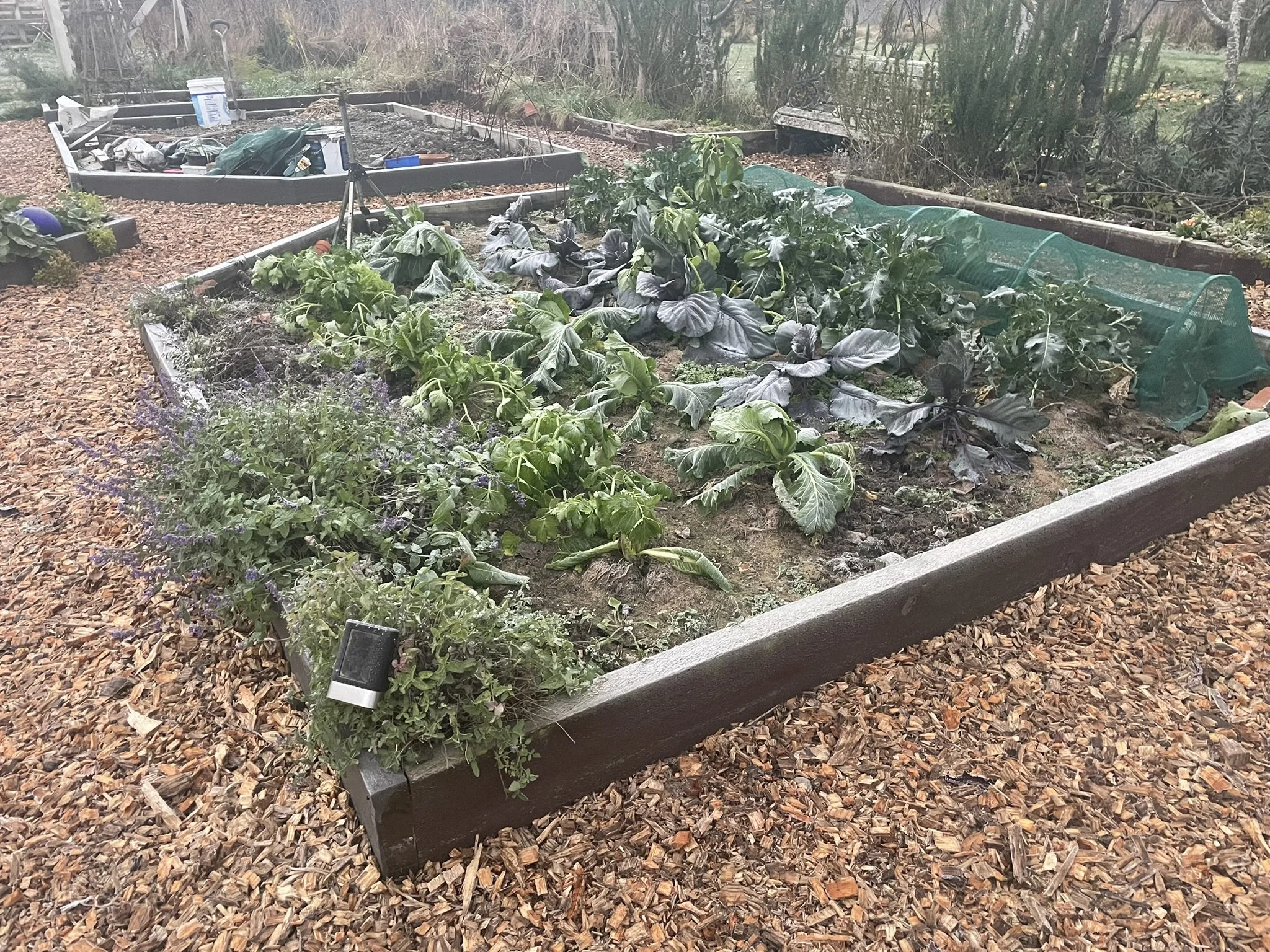
Frosted Vegetables! Bed 3 with Group 2 Plants
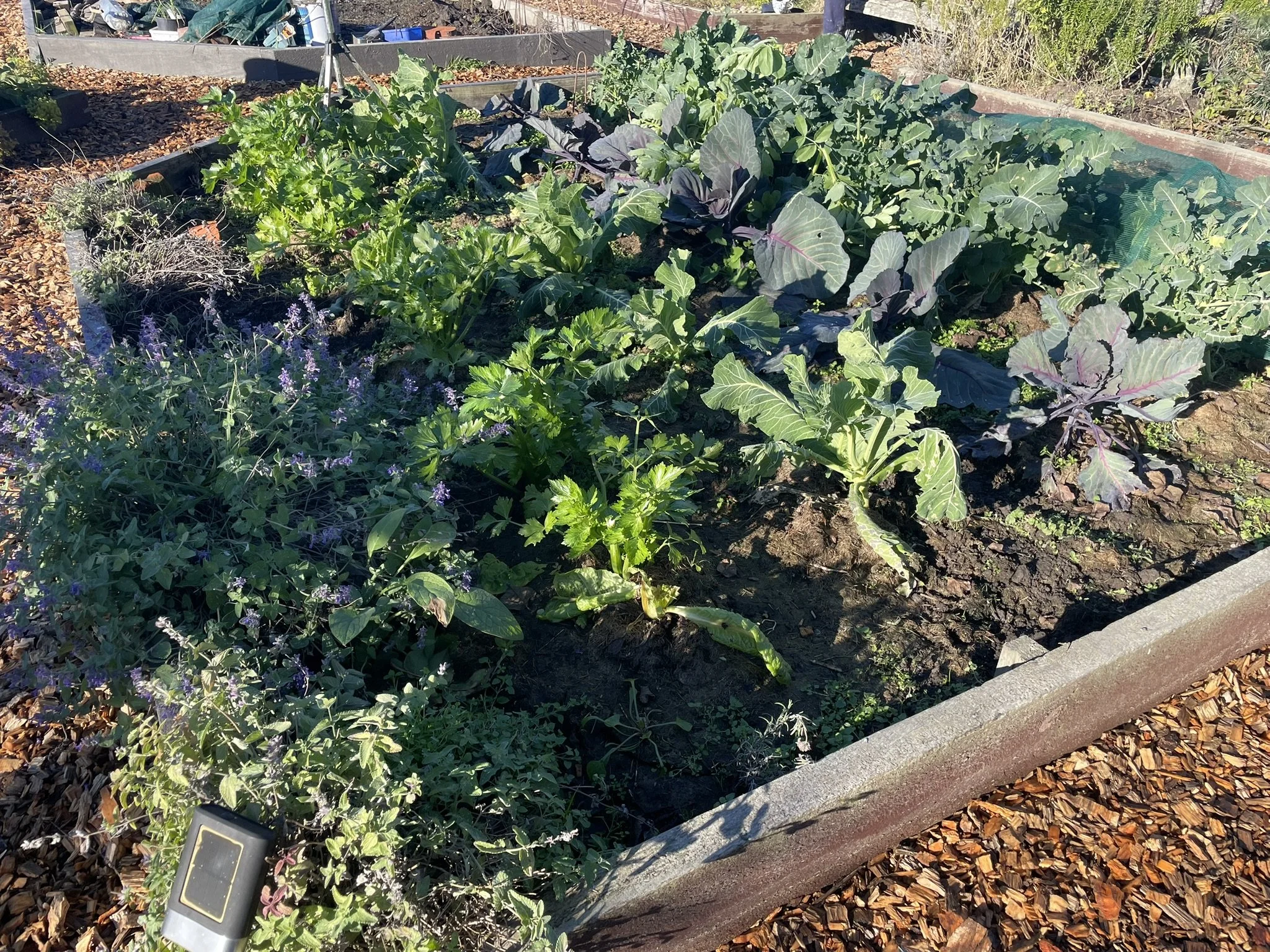
Leafy Greens after defrosting.
Bed 2. This is the bed that the new season’s Group 2 will go in and follows the legumes that were in here. The idea is that the legumes provide the nitrogen that the green leafy vegetables love. I have broad beans in here and you can still sow more if you like. Treat them either as a nitrogen-fixing green crop, or harvest in spring. This year I realised I need more succession planting of winter greens so have started also planting young brassicas, celery and herbs such as coriander and parsley in here too. So it is a bit of a transitional bed this time of year. Keep weed free and mulch. If you have just sown a green crop, chop back now to allow time to rot down for spring.
Bed 3. This will be the legume bed for the new season so this is where your Group 1 plants will go in spring. You have the choice of planting broad beans here too. (I have them in both Bed 2 and Bed 3). You may still have root crops in here. I left my carrots in the ground this year so still have a few left. But as I finish harvesting any root vegetables in this bed, I give it plenty of manure, compost and anything else you have to build up the soil. If you think that the legume cycle begins the re-building of the soil then you understand that you can make this bed the main recipient for all the goodies you have. Last month I emptied the compost bin into here and also have started compost in situ - digging a trench and putting household traps in before covering and allowing to rot down. It should be able to take all the mulching and composting you can give it. I also give it some lime and a bit of general fertisilers.
So that’s the main 4 beds done. July is also time for planning. If you don’t have a copy yet, then I do have a pdf that you can download to help you with your planning. Its a template of each year in the cycle and you just write the name of the current year at the top, fill in the Bed numbers and away you go.
I’ll cover off the perennial beds next time.
Growing for this month at at Glance.
Northern warmer areas.
Broad Beans, Garlic, Onions, peas, potatoes (start chitting) radish and shallots, Cabbage,
Sow; (Under Cover for spring planting) Carrots, beetroot, cabbage, lettuce, onions, parsnip, peas, silverbeet
Southern Cooler Areas.
Sow or Plant. Garlic, Shallots, Cabbage,broad beans, lettuce, mustard, onions, peas, spinach, turnips.
Potatoes can be set out for chitting. Rhubarb rhizomes, asparagus crowns and strawberries can all be planted.